How Much Does a Brick Weigh? Weight by Type, Size, and Dimensions
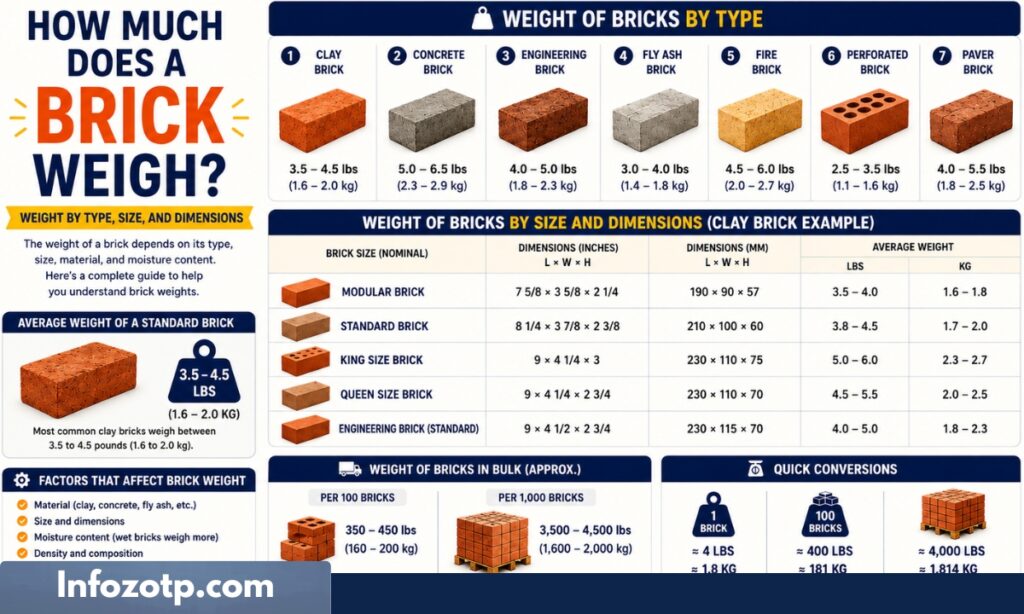
A standard red clay brick weighs about 4.5 pounds (2.04 kg).That is the number most people search for, so there it is right away.But not every brick matches that, a tiny thin brick can weigh under a pound, while a big concrete block can top 30 pounds.
The real answer depends on brick size, material, and whether it is solid or hollow.This guide breaks down every common brick type with real numbers, so you know exactly what you are lifting, hauling, or building with.
The Average Weight of Standard Red Bricks
The classic red brick is the one most people picture first.It gets that reddish color from clay that reacts to heat inside a kiln, kind of like toast getting darker the longer it sits.A standard red brick weighs close to 4.5 lbs (2.04 kg), and masonry pros usually work with a density range of 120 to 140 pounds per cubic foot when planning bigger projects.
Not every red brick matches this exactly though, since some come out of the mold with tiny air pockets, sometimes called a pitted interior, which shaves a little weight off.That is why estimating with an average weight works better than assuming every brick is identical.Here is the quick math people search for most.
500 bricks on a pallet at 4.5 lbs each comes out to roughly 2,250 lbs (1,020 kg), and 1,000 bricks lands around 4,500 lbs, just over 2 metric tons.That number decides whether your truck or trailer can handle the load safely.
Brick Weight by Size and Dimensions
Size changes brick weight faster than almost anything else.
Move from a small modular brick up to a giant Double Monarch brick and the weight can jump six times over.
Modular bricks are the most common size in newer homes, weighing about 4.2 lbs (1.9 kg), just a touch lighter than a standard red brick.
Queen bricks run longer and heavier at around 5.6 lbs (2.54 kg), and builders often pick them for fewer joints across a wall.
King size bricks are shorter but thicker, coming in at roughly 6.5 lbs (2.95 kg), and they show up a lot in commercial buildings chasing a bold, chunky look.
Once you hit large format bricks, weight climbs fast, a Utility brick runs about 10.2 lbs (4.63 kg), a Monarch brick hits 12.5 lbs (5.67 kg), and the Double Monarch tops the list at 25.5 lbs (11.57 kg).
Here is a quick side by side so you can compare at a glance.
| Brick Type | Dimensions (approx) | Weight (lbs) | Weight (kg) |
| Thin Brick | 7-5/8″ x 2-1/4″ x 3/8″ | 0.88 lbs | 0.40 kg |
| Modular | 3-5/8″ x 2-1/4″ x 7-5/8″ | 4.2 lbs | 1.90 kg |
| Standard Red | 3-5/8″ x 2-1/4″ x 8″ | 4.5 lbs | 2.04 kg |
| Roman | 3-5/8″ x 1-5/8″ x 11-5/8″ | 4.7 lbs | 2.13 kg |
| Queen | 3-1/8″ x 2-3/4″ x 9-5/8″ | 5.6 lbs | 2.54 kg |
| King Size | 7-5/8″ x 3-5/8″ x 4-1/2″ | 6.5 lbs | 2.95 kg |
| Utility | 3-5/8″ x 3-5/8″ x 11-5/8″ | 10.2 lbs | 4.63 kg |
| Double Monarch | 3-5/8″ x 7-5/8″ x 15-5/8″ | 25.5 lbs | 11.57 kg |
That double monarch is basically the heavyweight boxer of the brick world.
Concrete Brick vs. Concrete Block Weights
Concrete blocks play a whole different game than clay bricks.
They pack in denser aggregate, the sand and stone mixed into the concrete, and that pushes weight way up.
A standard dense concrete block, the kind most people call a cinder block, measures 8″ x 8″ x 16″ and weighs around 32 lbs (14.5 kg), and a full wall of these can carry up to 90 lbs per square foot, which is why they need serious footings underneath.
Not all concrete is built like a tank though.
Lightweight concrete blocks swap in lighter materials like shale, dropping to about 16 lbs (7.26 kg), and aircrete blocks trap air bubbles right into the mix, landing around 8 lbs (3.63 kg), though they trade off some strength for that lighter feel.
Hollow vs. Solid Brick Weights
Ever pick up a brick and think, wait, that felt way too light?
Check for holes, because a lot of bricks are hollow or cored on purpose, and those gaps can eat up 25 percent to 60 percent of the brick’s surface by design, not by defect.A standard hollow brick, sized around 8″ x 8″ x 16″, weighs close to 18 lbs (8.16 kg), noticeably lighter than a solid block the same size.
The holes are not just about saving weight, they trap air inside the wall for insulation and keep indoor temps a bit more stable.For projects where every pound counts, like an upper floor addition, builders sometimes reach for expanded clay hollow bricks, which can drop as low as 6 lbs (2.72 kg).
Thin Brick and Veneer Weights
Love the look of exposed brick but your wall cannot handle a heavy load?
Thin brick veneer is the fix, a slim slice of real brick running only 3/8 inch to 1/2 inch thick, with a single piece weighing around 0.88 lbs (400 grams).
Spread across a wall, that works out to roughly 5 to 6 lbs per square foot, light enough to go straight onto drywall in many cases.
That is exactly why thin brick shows up so often in kitchen backsplashes and DIY fireplace makeovers, no extra structural support needed, just a quick weekend upgrade.
Read This: What Weighs 5 Pounds? 10 Common Things That Weigh 5 lbs
Specialty Bricks: Fire, Pavers, and Roman
Not every brick is built for stacking a wall, and some jobs call for a very specific type.
Fire bricks survive serious heat inside kilns, furnaces, and pizza ovens, weighing about 7.7 lbs (3.5 kg), with high heat versions running up to 9 lbs (4.1 kg) and insulating fire bricks staying lighter at around 5 lbs (2.3 kg).
Pavers sit under your feet, not over your head, built flat and tough for walkways and patios, and a standard clay paver usually weighs between 4.5 lbs and 5 lbs.
Roman bricks bring a longer, slimmer look architects love for a sleek style, weighing around 4.7 lbs (2.13 kg), close to standard weight despite the different shape.
How Much Does a LEGO Brick Weigh?
Not every brick question is about building a house, and plenty of curious minds, including grown adult LEGO fans, want to know how much those little plastic bricks weigh.
A classic 2×4 LEGO brick weighs somewhere between 2.22 grams and 2.5 grams, and a smaller 1×4 LEGO brick comes in around 1.6 to 1.7 grams.
That small range exists because LEGO molds have changed over the decades, some bricks have hollow tubes underneath, and even plastic color can shift weight slightly since clear bricks use a different material than solid colors.
Fun fact, LEGO builds at roughly a 1 to 40 scale compared to real life, so a real metric ton shrunk down would land around 13.33 LEGO pounds.
Calculating Weight for Construction Projects
Knowing one brick’s weight is nice, but real projects deal in bulk, so here is math that actually matters on site.
A handy rule of thumb, 444 standard red bricks equal about one ton (2,000 lbs), based on the average 4.5 lb brick, and a typical pallet of 500 bricks works out to 2,250 lbs, or close to 1,020 kg.
That is heavy enough that most pickup trucks need at least a 3/4 ton or 1 ton rating to haul a full pallet without straining the suspension.
Zoom out to a full home and the numbers get bigger fast, a typical 2,000 square foot, two story house with full brick veneer can carry between 200,000 and 300,000 lbs of brick, based on roughly 40 to 45 lbs per square foot of wall area, which is exactly why brick homes need thicker footings than vinyl or wood sided homes.
Why Brick Weight Matters
Weight is not just trivia, it shapes almost every decision on a build.
Transportation comes first, since loading a truck with heavy bricks like Monarch or Double Monarch sizes without checking the weight limit can damage the vehicle or make it unsafe to drive.
Structural integrity matters just as much, since a foundation built for lightweight siding will crack under a full brick veneer if nobody planned for the extra weight.
Labor and installation feel it too, masons handling heavier bricks like King size or Double Monarch need more time and often extra hands to avoid injury.
Get the weight numbers right at the start, and the rest of the project runs a whole lot smoother.
Brick Weight and Moisture, A Factor People Forget
Clay bricks are somewhat porous, so they can soak up small amounts of water from rain or humidity before they are sealed.A brick that feels dry and light in the store can weigh slightly more after sitting outside through a rainy week.It is usually just a few percent, but across thousands of bricks that adds up to real extra pounds on your truck and your foundation math.
Conclusion
Bricks are not one size fits all, and the weight proves it every time.A standard red brick sits around 4.5 lbs, a thin veneer brick barely tips the scale at under a pound, and a Double Monarch or dense concrete block can weigh 20 to 30 times more.
Know the numbers for your specific brick type, and planning your truck load, foundation, and labor gets a lot easier.Whether you are building a fire pit, finishing a two story home, or settling a debate about LEGO bricks, getting the weight right is always step one.